Scintillation
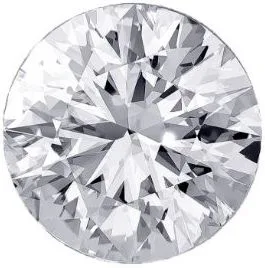
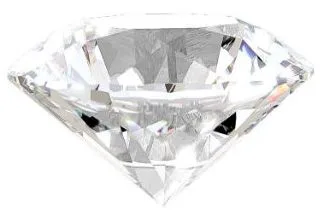
The amount of sparkle a diamond produces, and the pattern of light and dark areas caused by reflections within the diamond
Grading will also take into account the design and craftsmanship of the diamond, including its weight relative to its diameter, its girdle thickness (which affects its durability), the symmetry of its facet arrangement, and the quality of polish on those facets.
Shape
There are many different diamond shapes. The most popular are round brilliant, princess, pear, emerald, oval, marquise, heart and asscher.

Asscher Cut: Introduced in 1902 by renowned diamond cutter Joseph Asscher, this diamond shape utilises many of the same cutting techniques as the emerald cut. What sets asscher diamonds apart are their uniquely angled and cropped corners creating a timeless look.
Cushion Cut: First introduced to the jewellery market in the early 1800s, the cushion cut diamond is rich with diamond history, though today’s cushion cut is slightly different. Cut into a square or rectangular shape with rounded corners and sides, it’s considered by many to be a more vintage version of the round cut diamond.
Emerald Cut: Emerald cut diamonds are usually rectangular in shape. Distinguished by bevelled corners and step facets, this type of diamond is more transparent than other shapes, often requiring higher standards of clarity.
Heart Cut: Living up to its name, the heart cut diamond has become synonymous with love and affection, making it an excellent choice for an anniversary or engagement ring. One of the most demanding diamond cuts to create, a heart shaped stone requires great skill and dexterity from the diamond cutter.
Marquise Cut: The marquise cut is rumoured to have been specially developed for King Louis XIV of France who wanted a diamond that simulated the smile of Marquise de Pompadour. The elongated marquise stone has gracefully pointed ends for a dramatically beautiful appeal.
Oval Cut: Cut with the same number of facets as a round diamond, an oval shape emits nearly the same level of brilliance and fire. Due to its elongated shape, the oval cut can appear larger than a round diamond of equal carat (weight).
Pear Cut: Exuding elegance, the pear shape diamond (also referred to as a drop cut or teardrop diamond) is cut to resemble a drop of water with a single point and rounded end. The result is a cross between a round and marquise cut.
Radiant Cut: Relatively new to the jewellery industry, radiant diamonds were introduced a little more than 20 years ago. This unique shape is a stunning hybrid of a traditional round cut and an elegant emerald cut, resulting in a square, near-square, or rectangular orientation. As the name suggests, radiant diamonds tend to emit a beautiful, memorable glow.
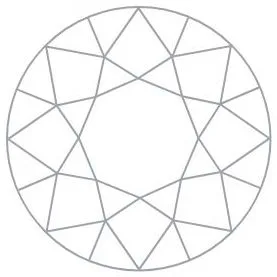
Round Brilliant Cut: The Round Brilliant came to the forefront on diamond cutting around 1919. It has since grown in popularity to become the most used cut globally. It has gained such popularity due to the wonderful fire and brilliance it has from the circular girdle and the amount of facets, 58. It has been finely cut to a point, losing the culet at the bottom of the stone, allowing the stones to differ from previous round cuts.
Princess Cut: A square stone with 90-degree corners, the princess shape originated in the United States in 1980. The most desirable princess diamonds are perfectly square in shape, with the more rectangular variations decreasing in value.
Step Cut: Cutting style with mainly square and rectangular facets arranged in concentric rows, simulating a mirrored staircase.
Antique Stone Cuts
As specialists in antique jewellery we recognise the beauty and extraordinary quality of antique cut diamonds and original antique pieces. Many of these stones would have been passed down from generation to generation in families, sometimes being re-set by the bride in current styles.
Every antique stone is unique, special and one of a kind. The stones themselves were cut by hand using a series of tools including a cleaver. It often took months to study diamonds before cutting, and then months to cut, to ensure the most beautiful result. The famous Cullinan diamond took two years to study and cut.
The Different Antique Cuts
Rose Cut: The rose cut features a flat bottom with a dome-shaped crown, rising to a single apex. With anywhere from 3 to 24 facets, a rose cut diamond resembles the shape of a rose bud. The rose cut dates to the 1500s and remained common during the Georgian and Victorian eras.
Old European: 1700s–1900. These stones are largely round in shape, have circular girdles, small tables, a heavy (or tall) crown and great overall depth.
Old Mine: 1830s–1900. These have more of a square or cushion shape in comparison to the Old European. It was an early version of the modern brilliant cut. They have a high crown, small table and large ‘open’ culet. The old mine cut was originally developed to sparkle its best in incandescent or candle light; the perfect evening accessory.
Old Cut: Refers to a stone cut with a rounded outline and large culet, predominantly prior to 1910. This style was meant to maximise light return in low light conditions, namely candlelight.
Antique Cushion: 1830s–1900. This is often referred to as a ‘pillow’ shape. It has a large or ‘open’ culet and is rectangular to square, with rounded corners. Like the modern emerald cut, your eyes will delve deep into an antique cushion cut stone.
Transitional Cut: 1870s–1940s. This is the transition between the old European and the modern brilliant cuts. The angles of these stones are more similar to the modern brilliant to other antique cuts. For example, the table facet size is increased, and culets are nearly nonexistent or ‘somewhat large’ but could not be described as ‘large’ or ‘open’.